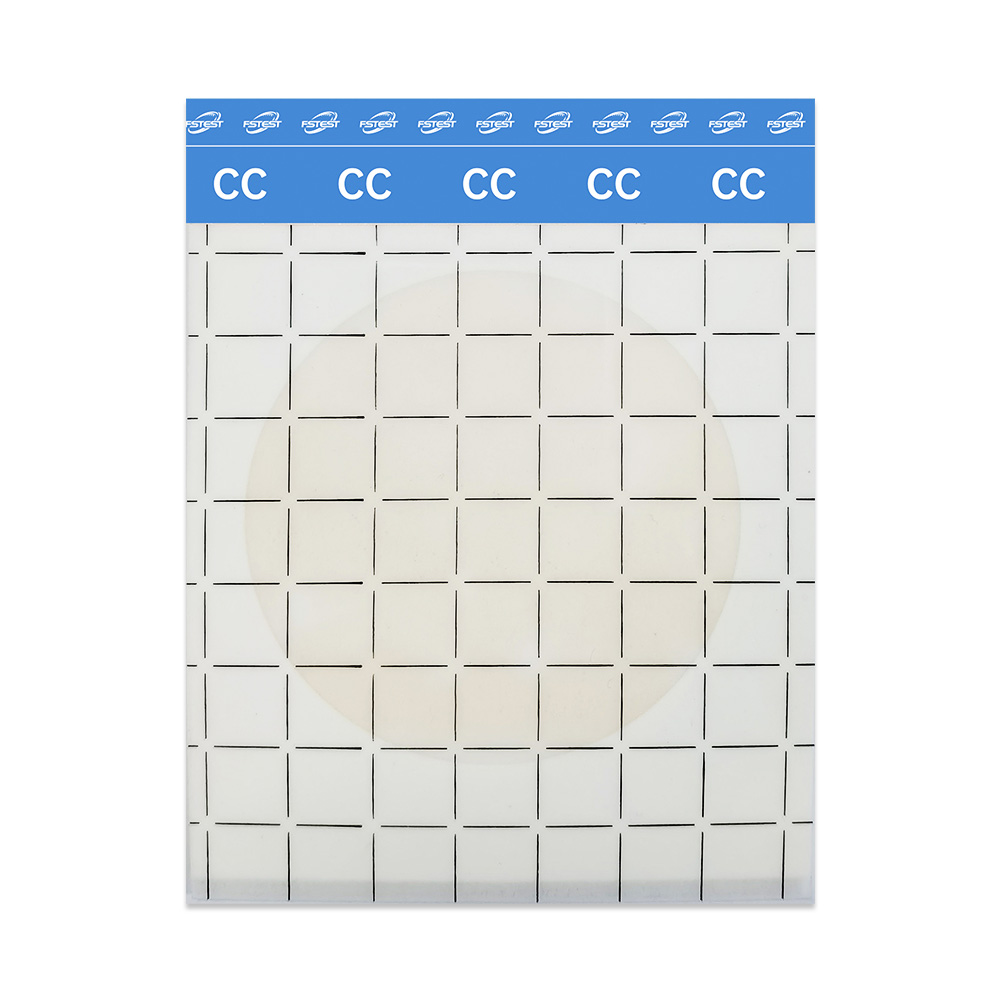
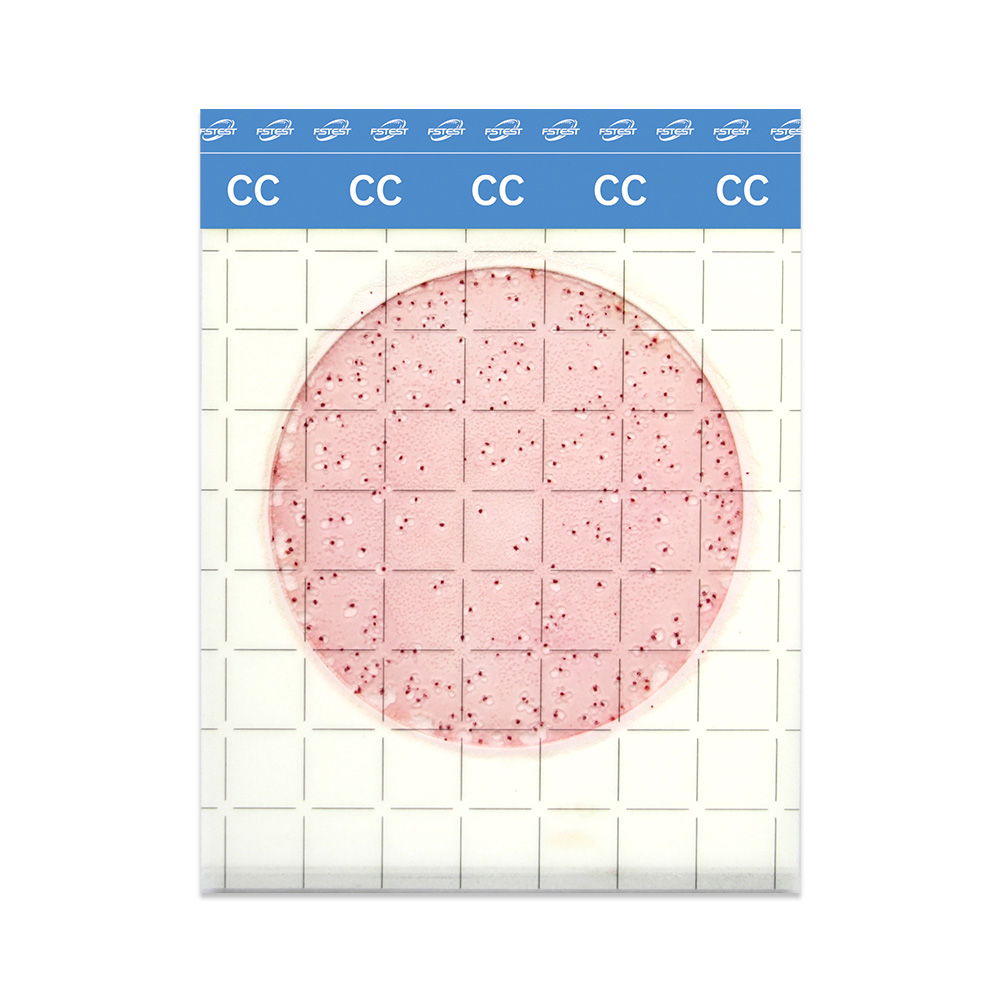

FSTest Coliform Count Plate (Gel-Type) (25 Tests)
Product Overview
The FSTest Coliform Count Plate (Gel-Type) is a ready-to-use, disposable, and simplified culture medium designed for the rapid enumeration of coliform bacteria in food, food raw materials, and water samples. This modern microbial testing system replaces conventional, laborious agar preparation, autoclaving, and petridish pouring workflows.
By incorporating standardized dry nutrients with a cold-water-soluble gelling matrix and a selective pH indicator system, it provides food processing plants, dairy labs, and environmental monitoring agencies with an efficient, reliable tool to track hygiene indicators and maintain strict HACCP compliance.
Product Highlights & Key Benefits
· Dual-Confirmation Technology: Combines a chromogenic acid indicator with a top film layer that traps fermentation gas bubbles, delivering highly reliable visual confirmation.
· Rapid 18-to-24 Hour Results: Drastically cuts down on product holding times with incubation cycles completed in under 24 hours.
· Pre-Sterilized & Ready to Use: Eliminates boiling, cooling, and agar medium preparation. Simply uncover the top layer, pipette the liquid sample directly, and let it solidify.
· Clear Visual Contrast: Active coliform bacteria ferment lactose, producing acid that turns the indicator red. This yields vibrant red colonies accompanied by trapped gas bubbles for error-free counting.
· Ambient Logistics Advantage: Unopened kits withstand room temperature transportation for up to 15 days, providing notable shipping cost benefits before refrigeration storage.
Technical Principle & Visual Mechanism
The FSTest Coliform Count Plate relies on standard coliform metabolic indicators. The custom formulation consists of peptone, yeast extract, lactose, a selective cold-water-soluble gel, crystal violet (to inhibit non-target Gram-positive flora), and a neutral red indicator.
Coliform Bacteria + Lactose → Acid Production (Red Colonies) + Gas Production (Trapped Bubbles)
During growth, target coliform bacteria ferment the lactose within the matrix to produce organic acid and gas. The localized acid reduction drops the pH, shifting the neutral red indicator to red, coloring the colony. Simultaneously, the overlaying thin film captures the released gas, forming a clear bubble tightly adjacent to the red colony to mark a definitive positive confirmation.
Specifications & Limit of Detection
Parameter | Product Specification |
Target Organisms | Coliform Bacteria (Lactose-Fermenting, Acid/Gas Producers) |
Applicable Matrix | Various Foods, Food Raw Materials, and Water Samples |
Limit of Detection (LOD) | 1–10 CFU/mL (or g) |
Optimal Counting Range | 15–150 CFU per plate |
Incubation Parameters | General Foods: 36 ± 1°C for 18–24 hours |
Step-by-Step Procedure
1. Serial Dilution (Sample Treatment)
· Primary 1:10 Dilution: Weigh or measure exactly 25 g (or mL) of the sample and add it into a sterile container or homogenization bag containing 225 mL of sterile water, sterile saline, or standard phosphate buffer solution. Homogenize thoroughly to get the 1:10 sample homogenate.
· Subsequent Dilutions: Pipette 1 mL of the 1:10 homogenate into a test tube containing 9 mL of sterile diluent to achieve a 1:100 ratio. Repeat sequentially to yield higher dilutions (1:1000, etc.) as required, making sure to use a brand-new pipette tip for each individual step. (Note: Original undiluted liquid samples can be evaluated directly when necessary.)
2. Inoculation Workflow
· Place the test count plates onto a sterile laboratory bench, clean bench, or biosafety cabinet.
· Carefully lift and uncover the top protective film barrier layer.
· Pipette exactly 1 mL of the prepared sample dilution and dispense it directly onto the center of the circular inoculation area.
· Smoothly lower and recover the film, taking care to completely avoid trapping random air bubbles.
· Gently place a standard plate spreader over the film to evenly distribute the liquid sample over the circular matrix. Let it stand undisturbed for at least 10 seconds until the cold-water gel completely solidifies.
· Inoculate duplicate plates for each dilution level alongside one blank negative control.
3. Incubation Settings
Stack the solidified plates horizontally with their front sides facing upward. To ensure uniform thermal distribution inside the incubator, do not stack more than 20 plates together at a time. Incubate based on your sample matrix type (36 ± 1°C for general foods, or 30 ± 1°C for dairy for 18–24h).
Results Determination & Action Guide
· Standard Enumeration: Select plate diluents displaying a moderate colony density within 15–150 CFU. Multiply the counted colonies by the corresponding dilution factor to obtain the number of coliform bacteria per gram or milliliter. Report the final results in CFU/g or CFU/mL.
· Control Validity Check: If any red coliform colonies develop on the blank negative control plate, the entire testing log is deemed strictly invalid and the batch must be re-tested.
Crucial Technical & Handling Precautions
· ⚠️Physical Gel Boundary: When removing the count plates from your incubator, do not apply finger pressure directly onto the central circular inoculation area, as this can disrupt the gel structure and displace colony points.
· ⚠️Matrix pH Boundaries: The pH value of your incoming sample homogenate must ideally be adjusted to fall between a neutral 6.5 and 7.5 range. Use 1 mol/L NaOH or 1 mol/L HCl solutions to adjust the pH if necessary.
· ⚠️Biosafety Disposal Protocol: Used diagnostic plates house active live microbial colonies. Treat and dispose of them immediately after use according to standard international biosafety waste laws and sterilization guidelines.


